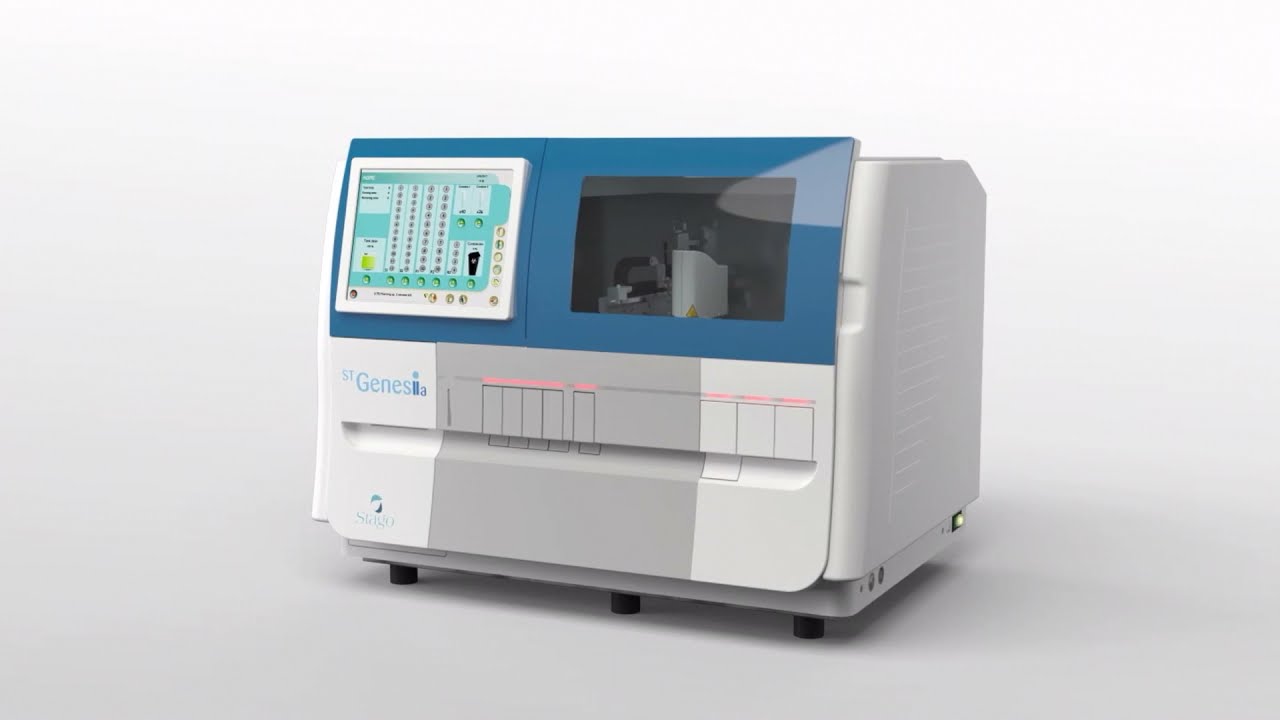
What is the Thrombinoscope?
The Thrombinoscope is an automated laboratory robot designed to perform thrombin generation analysis, a sophisticated assay used to measure the coagulation capacity of blood plasma. The system automates the Calibrated Automated Thrombogram (CAT) assay, which provides clinicians with a comprehensive picture of a patient’s haemostatic balance, useful in managing bleeding disorders, thrombosis risk, and anticoagulation therapy.
The technology was developed at Tegema (now Etteplan) in collaboration with Thrombinoscope BV, and was later acquired by Stago, one of the world’s leading specialists in haemostasis. Stago now markets the product as the ST Genesia platform.
The CAT assay
The Calibrated Automated Thrombogram measures how much thrombin is generated in a plasma sample over time, producing a characteristic thrombin generation curve (TGC). Unlike traditional clotting tests, CAT captures the full dynamics of the coagulation process, including peak thrombin, lag time, and endogenous thrombin potential, giving clinicians much richer diagnostic information.
Automating this assay removes the variability and manual effort of manual pipetting, incubation timing, and fluorescence measurement, while enabling high-throughput processing in a clinical lab setting.
Technology
The Thrombinoscope is a precision laboratory instrument combining:
- Robotics & automation: Motorised pipetting and plate handling to automate the full CAT workflow with microliter-level accuracy
- Embedded control software: C/C++ firmware on a real-time embedded platform, managing motor control, timing, and assay sequencing
- Fluorescence measurement: Integrated optical measurement system for tracking fluorescent substrate cleavage (the proxy for thrombin activity) over time
- PCB design: Custom electronics for motor drivers, sensor interfaces, and communication
- Medical device compliance: Developed under ISO 13485 (medical device quality management) as a certified in-vitro diagnostic device
My role
I worked on this project as an electronic engineer at Tegema, contributing to the design and development of the embedded control software and electronics. This included writing the real-time control firmware, designing and testing PCBs, and supporting system validation for CE-marking as an IVD medical device.